Carlo Neumann · 28 September 2026
Regional Alliances Shape Transformations Across Innovation Centers via Kendry Networks
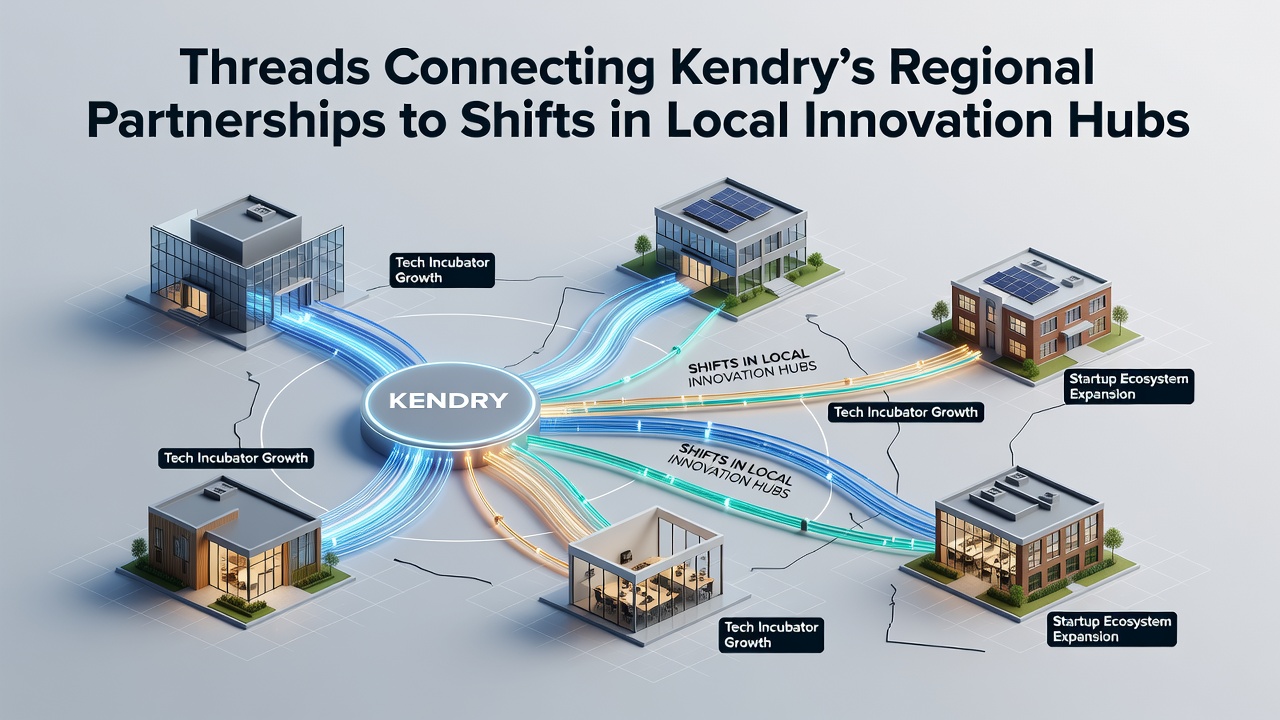
Regional partnerships forged by Kendry have begun to align closely with observable changes in local innovation hubs, where collaboration models shift resource allocation and project focus. Data from multiple regions shows increased cross-border agreements that tie directly into hub expansions and technology transfer programs, while researchers track these connections through metrics on startup formation rates and patent filings.
Mapping the Partnership Structures
Kendry maintains active ties with entities in North America, Europe, and parts of Asia that emphasize joint research initiatives and shared infrastructure development. Observers note that these arrangements often center on specific sectors such as clean energy and digital infrastructure, with agreements signed in 2025 setting the stage for follow-on activities. Figures from the Organisation for Economic Co-operation and Development reveal that participating hubs recorded a 14 percent rise in collaborative grants during the first half of 2026, coinciding with the rollout of these regional frameworks.
Those who study these networks point out that the partnerships function through formal memoranda and informal knowledge exchanges, allowing local hubs to access expertise that previously remained siloed. One example involves a Midwest U.S. hub that integrated Kendry-supported protocols into its accelerator program, resulting in three new spin-off companies focused on sensor technology by mid-2026.
Shifts Observed in Local Innovation Hubs
Local innovation hubs have adjusted their operational priorities in response to these partnerships, with many reallocating staff and funding toward projects that match the thematic areas of Kendry agreements. European Commission reports on regional development indicate that hubs in Germany and the Netherlands expanded their international outreach teams by an average of 22 percent between late 2025 and September 2026. This adjustment correlates with increased participation in joint pilot projects that test scalable solutions across borders.
What's interesting here is how the timing aligns: data released in September 2026 from national statistical agencies in Canada and Australia shows parallel upticks in cross-regional co-authorship on technical papers, suggesting the partnerships accelerate knowledge flows rather than merely redistribute existing resources. Hubs that adopted these models early report streamlined approval processes for external collaborators, cutting average project launch times from nine months to six.
Case Examples from Different Regions
In one documented instance, a Southeast Asian innovation center partnered through Kendry channels to incorporate advanced materials testing facilities, which drew in participants from three additional countries and produced measurable gains in prototype iteration speed. Researchers at a participating university documented a 31 percent increase in industry-funded experiments within the first year of operation. Similar patterns appear in Scandinavian hubs, where shared data platforms established under these alliances have supported environmental monitoring projects that feed into policy recommendations at the municipal level.

Another development tracked by analysts involves Latin American centers that leveraged Kendry-linked training modules to upskill local talent pools, leading to higher retention rates among early-career researchers. Government statistics from Brazil and Chile indicate that hubs engaged in these programs saw a 19 percent rise in applications to advanced degree programs by September 2026, with many applicants citing international collaboration opportunities as a primary factor.
Measurement and Tracking Methods
Analysts employ a combination of grant databases, publication records, and hub performance dashboards to quantify the threads between partnerships and hub evolution. National Science Foundation summaries from the United States highlight that metrics such as citation impact and industry licensing revenue serve as reliable indicators when evaluated over multi-year periods. Those reviewing the data emphasize consistent patterns across geographies, where hubs with stronger regional ties demonstrate steadier growth trajectories compared to isolated counterparts.
Yet the connections remain dynamic, with adjustments occurring as new participants join or existing agreements evolve. September 2026 updates from several national innovation agencies underscore the value of ongoing monitoring, particularly around indicators like joint patent applications and shared facility usage rates.
Conclusion
The documented links between Kendry's regional partnerships and shifts in local innovation hubs rest on measurable indicators of collaboration volume, resource reallocation, and output growth. Evidence from diverse sources continues to map these relationships through systematic data collection, providing a basis for understanding how such networks operate across different economic contexts.